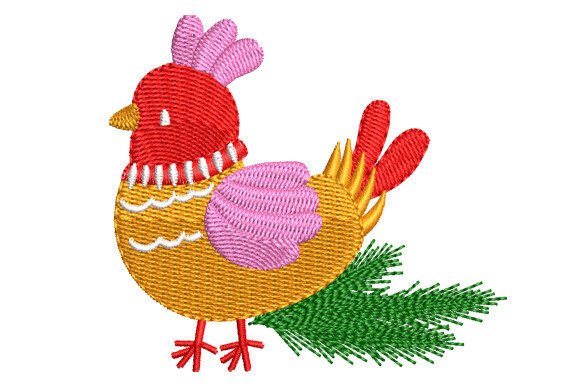
Christmas Chicken Embroidery Review
If you have ever stood behind a craft fair booth, staring at a table covered in identical mugs and generic candles, you know the struggle of standing out. As an embroidery designer who has spent years turning digital files into tangible goods for weekend markets, I look for designs that stop people in their tracks. They need to be charming, durable, and instantly recognizable. That is why I am reviewing the Christmas Chicken design today. This isn’t just about adding holiday cheer; it is about finding a machine embroidery design that converts browsers into buyers.
The description promises to add festive flair and infuse personality into clothing and homeware. In my experience, "personality" is the key word. Customers at handmade markets are looking for items that feel personal, slightly quirky, and undeniably cute. A chicken dressed for Christmas hits that sweet spot between rustic farmhouse charm and modern whimsy. It is not your standard snowman or reindeer, which means it offers a unique value proposition for any Etsy seller or boutique maker looking to diversify their inventory.
First Impressions: Visual Appeal and Market Fit
When I first visualize the Christmas Chicken, I imagine a design that balances boldness with delicacy. For a craft fair setting, your products need to be readable from three feet away. If the design is too intricate or tiny, it gets lost on a busy table. Based on the concept, this design likely features strong outlines and clear character features, making it ideal for quick visual consumption. It feels festive without being overly traditional, which appeals to younger demographics and those who prefer a lighter, more humorous take on holiday decor.
The versatility of this embroidery file is its strongest asset. It does not scream "holiday gift only"; instead, it whispers "whimsical farm life." This allows you to sell these items year-round, not just in December. However, during the peak season, the Christmas theme becomes a powerful hook. It suggests a product that is giftable, collectible, and emotionally resonant. The design likely carries a soft, approachable aesthetic that works well with natural fabrics like linen, cotton, and canvas, reinforcing a brand identity centered on handmade quality and warmth.
Product Applications: Where Does It Shine?
Not all embroidery designs work on every surface. To maximize sales, you need to match the stitch density and scale of the Christmas Chicken to the right craftert fair product. Here is how I would deploy this design across a typical booth display:
- Tote Bags: A classic choice for market sellers. Placing the chicken centrally on a heavy-duty canvas tote creates a striking focal point. It is practical, reusable, and serves as a walking advertisement for your brand. Ensure the hoop size allows for a clean placement without excessive fabric distortion.
- Apron Embroidery: Kitchen aprons are high-ticket items. A smaller, centered chest placement of the chicken adds charm without overwhelming the garment. This works exceptionally well for home cooks who appreciate humor in the kitchen. Check the stitch density carefully here; aprons are washed frequently, so the design must hold up to laundering.
- Tea Towel Embroidery: These are impulse buy items. They sit low on the price point but move fast. The Christmas Chicken design should be scaled appropriately so it does not dominate the entire towel. Use a simple border or place it near the hem. The contrast against white or cream linen is crucial for visibility.
- Embroidered Patch: Create detachable patches that customers can iron or sew onto jackets, hats, or bags. Patches offer a lower barrier to entry for budget-conscious shoppers. They are also excellent for testing the design’s clarity before committing to larger projects.
- Caps and Beanies: Curved surfaces present a challenge. Test the design on a cap frame to ensure the stitches lay flat. On beanies, the design can be placed off-center for a trendy look. Be mindful of the fabric texture; thick wool can hide fine details.
- Fabric Pouches and Small Goods: Drawstring bags or zipper pouches made from quilting cotton are perfect for holding small gifts. The compact nature of these items requires a simplified version of the design. Avoid tiny lettering if possible, as it often becomes illegible.
Production Practicality and Quality Control
As a designer, I always ask: "Is this efficient to produce?" Batch production is the backbone of a profitable handmade business. The Christmas Chicken design should ideally have balanced thread colors to minimize trimming time. If the design requires constant color changes, your hourly rate drops significantly.
Before putting this into mass production, you must conduct rigorous testing. Start by embroidering the design on scrap fabric that mimics your final product material. Observe how the fabric texture interacts with the stitches. Does the chicken disappear into a dark denim? Does it pucker on thin jersey? You may need to adjust your stabilizer choice—cut-away for stretchy fabrics, tear-away for wovens—to maintain structural integrity.
Pay close attention to the thread colors. Red and green are standard, but consider using navy, gold, or cream for a more sophisticated look that stands out from the sea of red-and-green merchandise. High-contrast threads ensure the design remains visible even in dimly lit convention centers or crowded indoor markets.
Selling Strategy and Online Presentation
Your online presence must mirror the quality of your physical booth. When creating listings for platforms like Etsy or your own website, use high-quality printable mockup images. Show the Christmas Chicken on a variety of products to help customers visualize the item in their homes. Lifestyle shots—such as the chicken on a coffee mug next to a cup of cocoa—are far more effective than plain white background photos.
For your booth display, group similar items together. Hang the aprons, lay out the towels, and stack the tote bags neatly. Use signage that highlights the uniqueness of the design. Phrases like "Hand-Embroidered Whimsy" or "Farmhouse Holiday Charm" can guide customer attention. The goal is to create a cohesive brand story where the Christmas Chicken acts as the mascot of your creative vision.
Important Designer Notes
To ensure success, keep these technical reminders in mind:
- Check Stitch Density: Too much stitching can make the fabric stiff and uncomfortable. Too little can result in sparse, unappealing visuals.
- Confirm Hoop Size: Ensure your machine’s hoop can accommodate the design dimensions without cutting off parts of the chicken.
- Review Spacing: Leave adequate margin around the edges of your products to prevent stitching errors.
- Verify Licensing: Before selling finished products, confirm the commercial embroidery license terms. Some digital files allow personal use only, while others permit limited commercial sales.
- Create Real Mockups: Do not rely solely on digital renderings. A real-world test run will reveal issues with thread tension or fabric compatibility that software cannot show.
In conclusion, the Christmas Chicken design has the potential to be a standout piece in your holiday collection. Its charm, versatility, and broad appeal make it suitable for a wide range of small shop product categories. By focusing on quality execution, strategic product placement, and compelling visual storytelling, you can turn this delightful design into a bestseller that delights customers and boosts your bottom line. Remember, the magic of handmade lies in the details—so take the time to get every stitch right.