Too Cold to Care: A Winter-Ready Embroidery Design Review
First Impressions and Design Personality
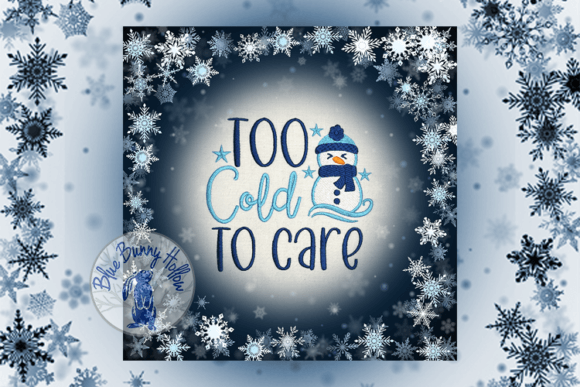
The moment I laid eyes on the Too Cold to Care embroidery design, it struck me as a perfect blend of whimsy and warmth. The phrase itself is lighthearted, with a cheeky tone that immediately evokes the cozy, carefree feeling of a lazy winter day. Paired with a nonchalant snowman figure—complete with a scarf and hat—it transforms from a simple message into a charming visual narrative. As an experienced embroidery designer, I appreciate how this design manages to be both playful and elegant, making it ideal for sweatshirt embroidery projects aimed at boutique brands or small shop products. The layout is balanced and intentional. The snowman sits comfortably beside the text, creating a harmonious composition that doesn’t overwhelm the viewer but still holds attention. It’s clear that the design was crafted with handmade product appeal in mind, offering enough detail to feel special without being overly complex. This makes it versatile across different styles and placements on seasonal apparel like hoodies or oversized sweatshirts.Stitching and Visual Appeal
What really sets Too Cold to Care apart is its stitching personality. The design features soft curves and clean lines that translate well into machine embroidery. The snowman’s round belly and gently sloping head give it a friendly, approachable look, while the embroidered text carries a casual, modern edge. When stitched out, the result should have a tactile, dimensional quality that elevates the overall aesthetic of any custom apparel piece.Placement and Proportions
When considering hoodie design placement, I see Too Cold to Care fitting well in several key areas:- Chest Placement: Centered over the heart area, the design would make a bold yet stylish statement. Its moderate size ensures it doesn’t dominate the front but still commands attention.
- Sleeve Accents: A smaller version of the snowman paired with the phrase could work nicely as a sleeve graphic, especially on oversized hoodies where subtle details matter.
- Back Designs: Placed lower on the back, it can serve as a fun surprise element for customers who catch it from behind—a great way to build brand identity and customer engagement.
Design Considerations for Production
Thread Color Contrast: The design's charm lies in its simplicity, so choosing thread colors that stand out is crucial. On darker sweatshirts, opt for high-contrast threads like white, light gray, or even pastels for a softer touch. Neutral or light-toned sweaters allow for more creative freedom, including metallic accents or multi-color schemes to highlight the snowman’s accessories.
Stitch Density: Too Cold to Care maintains a good balance between stitch coverage and breathability. It avoids excessive fill stitches that might lead to puckering, which is a common issue with thin sweatshirt fabrics. However, keep an eye on the density around the snowman’s body and facial details, as these may require slight adjustments depending on the fabric weight.
Fabric Thickness and Stabilizer Choice: This design works best on mid to heavyweight sweatshirts. If you’re planning to use it on thinner materials, such as lightweight fleece or cotton blends, consider using a tear-away stabilizer underneath to prevent distortion during stitching. For heavier fabrics, a cut-away stabilizer might not be necessary, but always test a sample before mass production.
Hoop Size and Readability: While the exact hoop size isn’t specified, based on the design’s scale, a 6x10 inch hoop should accommodate most placements comfortably. The text is designed with clarity in mind, and even in smaller sizes, it remains legible. That said, if you're printing on larger garments, scaling up slightly will only enhance the impact.
Durability and Washing: One of the biggest concerns for commercial embroidery is long-term durability. Too Cold to Care appears to be structured with sturdy outlines and minimal delicate filigree, which bodes well for wash resistance. As always, recommend pre-washing your sweatshirts before embroidery and using high-quality polyester threads to maintain color and integrity after multiple wears.